UGC ad structure: anatomy of a 35-second winning ad
A beat-by-beat breakdown of one 35-second talking-head UGC ad: seven beats, 14 shots, 154 words, with what each beat does and how to write your own version.
A UGC ad that sells has a structure you can measure. The one taken apart here is a pet supplement brand's ad for a dental powder: 34.7 seconds, one presenter in a kitchen, seven beats. It spends 18 seconds on the problem before the product appears, cuts every 2.5 seconds on average, and puts its proof right before the ask.
The numbers come from the shot-by-shot analysis ReplicateAds runs on a reference ad before remaking it. They describe one ad, not an average of many. Use them as a worked example to compare your own script against, not as a rule.
The ad in numbers
- Length and format: 34.7 seconds, vertical 9:16 (720×1280, 30 frames a second).
- Who and where: one presenter in a home kitchen, holding a small lapel microphone and talking to a phone camera for 82% of the ad.
- Shots: 14 shots in 6 setups, joined by 13 cuts. The average shot lasts 2.5 seconds.
- Script: 154 words in 10 lines, which is 4.4 words a second.
- Captions: word by word, on screen throughout.
The timeline, beat by beat
| Beat | Time | Seconds | Shots | What is on screen | What it does |
|---|---|---|---|---|---|
| Hook | 0:00 to 0:05 | 5 | 2 | Presenter to camera, a cut and then a punch-in zoom. Three photo inserts, one per symptom. | Picks out the owners who have the problem and tells them to stay. |
| Problem | 0:05 to 0:10 | 5 | 2 | The same setup, two punch-in zooms. | Turns something the owner has got used to into a warning sign. |
| Why it matters | 0:10 to 0:18 | 8 | 3 | Three new angles in the kitchen. A three-panel photo diagram from 0:11 to 0:16. | Shows where the problem leads and rules out the usual fix. |
| Product | 0:18 to 0:22 | 4 | 2 | The pack held by her shoulder, then the open jar from overhead. | Names the product as a personal recommendation. |
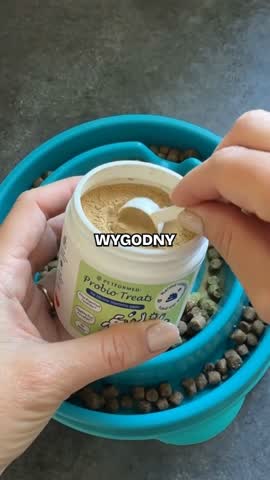
| How to use | 0:22 to 0:26 | 4 | 3 | Overhead shots of hands: scoop, sprinkle, lid back on. | Shows that using it takes no effort. |
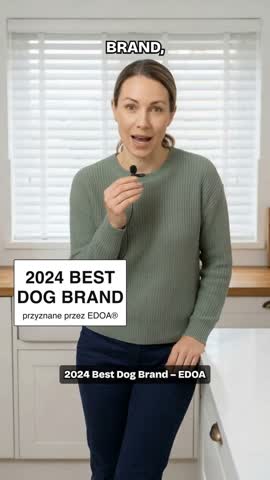
| Proof | 0:26 to 0:31 | 5 | 1 | Presenter to camera with an award badge and a lower-third label. | Gives a reason to believe that does not come from her. |
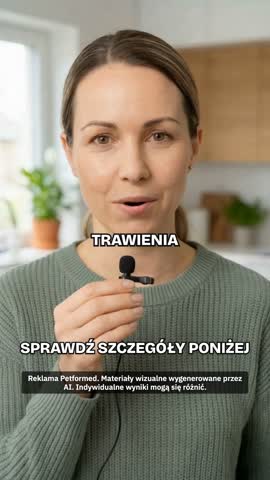
| Ask | 0:31 to 0:35 | 4 | 1 | A tight close-up, call-to-action text and a disclaimer. | Says what to do next. |
The pictures in this article show the same seven beats in an ad made from this structure for another product.
Hook, 0:00 to 0:05
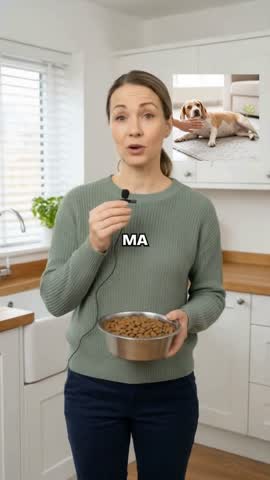
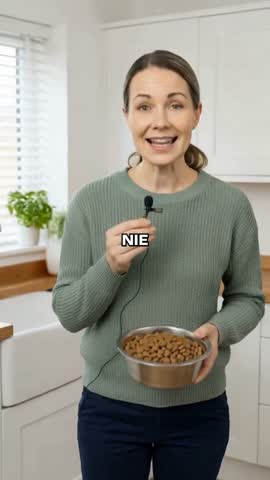
She names three symptoms a dog owner will recognise and says "you need to listen". A photo of each symptom pops on screen as she says it. There are two shots: a cut, then a punch-in zoom.
The hook does not mention a product or a category. It sorts the audience. An owner who has seen one of those three things stays, and everyone else scrolls on, which costs the advertiser nothing. Three symptoms give three chances to be recognised, and each photo confirms the match before the sentence is finished.
Your version: list the two or three things your customer notices before they know they have a problem. Use their words, the ones in your reviews and support messages. Put a picture on each. For more ways to open, see video ad hooks.
Problem, 0:05 to 0:10
She says the symptoms are not normal and are a sign something is wrong. The camera does not move to a new place: both shots are punch-in zooms on the same setup.
Most owners have filed these symptoms under "that is just how dogs are". This beat takes that excuse away. Until it lands, the viewer has no reason to want a fix. The zooms make the picture tighter as the statement gets more serious.
Your version: write down the belief that lets your customer live with the problem, then contradict it in one sentence.
Why it matters, 0:10 to 0:18
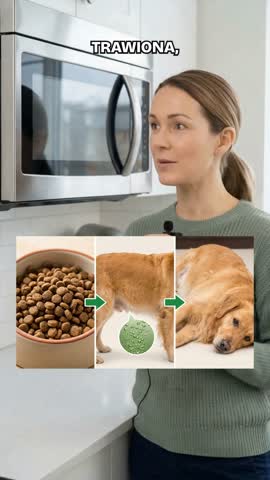
This is the longest beat: 8 seconds, 3 shots, each from a new angle in the kitchen. She explains how the problem gets worse while a three-panel photo diagram sits on screen from 0:11 to 0:16. Then she dismisses the usual fix, because most dogs will not tolerate it.
The beat does two things. The diagram shows the stages, so the viewer sees the consequence instead of taking her word for it. Ruling out the usual fix removes the viewer's objection ("I know what I am supposed to do about this") before the product appears. By 0:18 the viewer has a problem that will get worse and no acceptable answer to it.
Your version: say what happens if nothing changes, in stages you can show. Then name the answer your customer already knows and the honest reason they do not use it.
Product, 0:18 to 0:22
The product is on screen for the first time at 0:18, more than halfway through the ad. She holds the pack by her shoulder and recommends it by name "to my family members". The next shot is the open jar from overhead.
The wording matters. She does not present the product as an advertiser would. She says it is what she tells her own family to use, which is how a recommendation between people sounds. The pack by her shoulder keeps her face and the label in the same frame, so the viewer links the two. The overhead shot shows what is inside.
Your version: one sentence, the product's name, and who you would recommend it to. Four seconds is enough when the 18 before it did their work.
How to use, 0:22 to 0:26
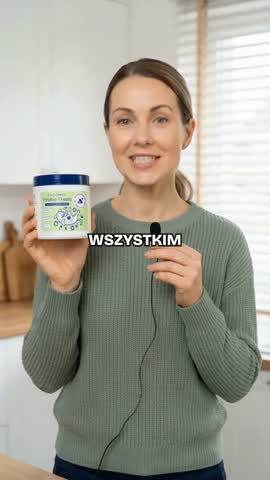
Three overhead shots of hands in four seconds: scoop, sprinkle, lid back on. The line is that it is a powder you sprinkle on the food, "that's it".
This beat answers the usual fix the viewer was told to forget a few seconds earlier. That one was a fight with the dog. This one is a scoop on dinner. The speed of the three shots makes the same point as the words: it is over almost before it starts.
Your version: film the use from above, hands only, one action per shot. If you cannot show your product being used in three short shots, show the single step that surprises people most.
Proof, 0:26 to 0:31
One shot. She names an award, and an award badge and a lower-third label are on screen while she does.
Until now the viewer has had only her word. An award is someone else's judgement, and the badge makes it visible to people watching without sound. It comes late on purpose: the viewer who is still watching at 0:26 is interested, and the last doubt left is whether the product works.
Your version: use the strongest proof you can document: an award, a count of reviews, a test result. If you have none, leave the beat shorter. Do not invent one.
Ask, 0:31 to 0:35
One shot, a tight close-up straight to camera, with call-to-action text ("learn more below") and a disclaimer on screen.
It is the closest framing in the ad, saved for the moment she asks for something. The ask is small: learn more, not buy now. The text repeats it where the viewer's thumb already is.
Your version: one instruction that matches the button on the ad. Put any disclaimer your category needs on screen here.
Five patterns worth copying
- Problem before product. The first three beats take 18 seconds and the product beat takes 4. If your draft opens on the product, move it back and see whether the first half can stand without it.
- A cut every 2.5 seconds. No shot stays long enough for the viewer to finish looking at it. At 4.4 words a second, there is no pause in the sound either.
- An insert for each claim. Three symptoms get three photos. The explanation gets a diagram. The award gets a badge. Each thing she says is also shown, which helps viewers who watch muted and makes the claim feel checked.
- One kitchen made to feel like many shots. There are 14 shots but only 6 setups. Punch-in zooms on the same framing account for the difference. You can get them in the edit from a single take, with no extra filming.
- Proof right before the ask. The award is the last thing the viewer hears before being told what to do, so the ask arrives when belief is highest.
How to use this on your own ad
Do not copy this ad's words or its claims. Copy its measurements. Take a winning ad in your own category and write down the same table for it: each beat, when it starts and ends, how many shots, what is on screen. Count its words and its lines. Then write your script line for line against it, so each of your lines does the same job in the same number of seconds.
The full method, including how to pick the reference and what you must not take from it, is in how to replicate a competitor's ad.
Questions
What is the structure of a UGC video ad?
The ad measured here runs in seven beats: hook, problem, why it matters, product, how to use, proof, ask. The first three are about the viewer's problem and take 18 of its 35 seconds. The product gets 4 seconds, its use 4, the proof 5 and the ask 4.
How many words fit in a 35-second UGC ad?
This one has 154 words in 10 lines over 34.7 seconds, which is 4.4 words a second. That is a fast, conversational read with no pauses between lines. Count the words in your own reference before you write, and keep each of your lines to the length of the line it replaces.
How often should a UGC ad cut?
This ad has 13 cuts in 34.7 seconds, so the average shot lasts 2.5 seconds. Several of those cuts are punch-in zooms on the same setup, not new camera positions. Measure the cut rate of the ads that work in your own category, because it varies by product and audience.
When should the product first appear in a UGC ad?
In this ad the product is first on screen at 0:18, more than halfway through. Everything before that is the viewer's problem. That order works when the viewer has to recognise the problem before the product makes sense. A product people already want can show up sooner.
Do I need several locations to film a UGC ad?
No. This ad has 14 shots in 6 setups, all in one home kitchen: a few angles on the presenter, punch-in zooms on the same framing, and an overhead view of the counter for the product shots.
Have an ad in mind? We will remake it for your product.
Send the ad and your product page. You get the same structure and timing with every frame, voice and line made new, in about an hour, from $23.
Request beta access